Columbia River Treaty
…we have never given up our rights to our mother, our mother’s resources, our governments and our religion; we will survive and continue to govern our mother and her resources for the good of all for all time.
– excerpt from the Okanagan Nation Declaration, 1987
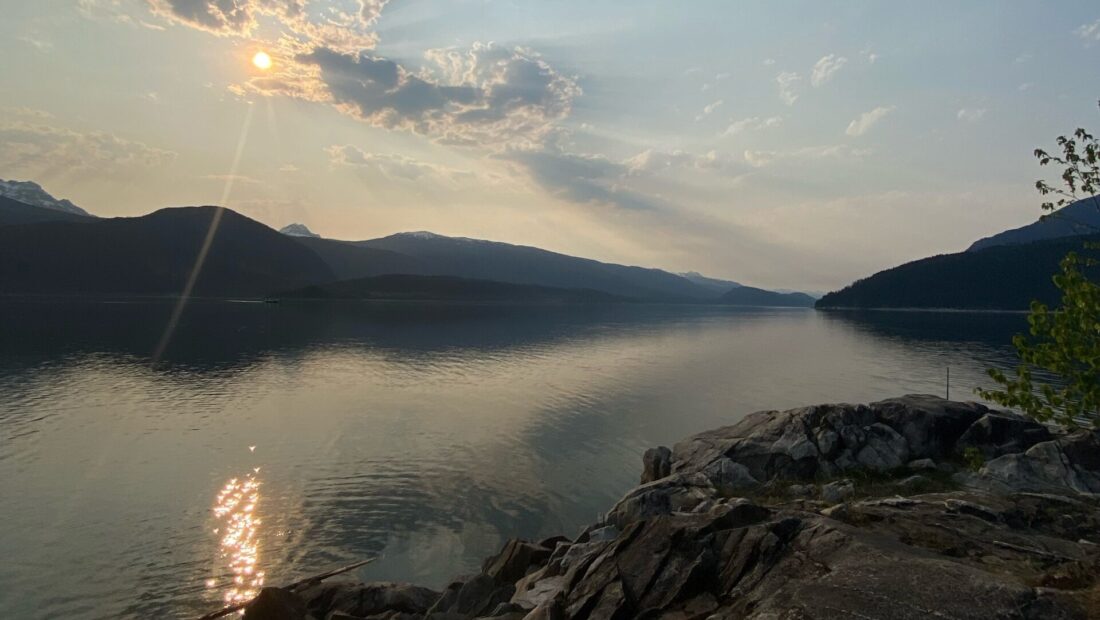
The Columbia River Treaty (CRT) is a transboundary water storage treaty, between Canada and the US, that has two major components: holding back 15.5 million acres/feet of water for flood control, while also optimizing hydroelectric energy production in the Columbia watershed every year. The Treaty resulted in the Province of BC storing a large amount of the annual spring run-off behind three Canadian dams (Duncan Dam, Hugh Keenleyside Dam, and Mica Dam), that flooded the Slocan Valley (Arrow Lakes) and converted the Upper Columbia watershed into a massive reservoir system, flooding an est. 270,000 acres, forever altering the environment.
This storage of water has generated millions of dollars of revenue, the majority of which largely goes to the Province of British Columbia as annual general revenue. However, it was developed and agreed upon by Canada and the US without consultation, involvement or consent of the Syilx Okanagan Nation. This exclusion of Syilx Okanagan peoples in the original Columbia River Treaty process, alongside its dams and their impacts, represent one of the most significant and on-going infringements of Syilx Okanagan Title and Rights.
Negotiations
Canada and the United States started preparing for the renegotiation of the CRT in the spring of 2018, as the flood control component of the Treaty otherwise terminates in 2024. Regardless of termination of the flood control component, hydro-electric production will continue.
Over the decades, the leadership provided by the Syilx Okanagan Nation’s Chiefs Executive Council (CEC), guided by Syilx Okanagan knowledge keepers, advisors, and language speakers, ensured the Syilx Okanagan Nation was not excluded from the CRT negotiations this time around. In 2018, Global Affairs Canada made an initial unilateral decision to exclude the First Nations from direct participation in the US-Canada CRT Renegotiation process between Canada and the US.
Through the hard work and dedication of Syilx Okanagan leadership and staff, the deputy PM and Minister of Global Affairs Canada, Minister Freeland reconsidered this previous decision and in April 2019, gave us a seat at the US-Canada CRT negotiation table. This was a hard-fought achievement which included legal intervention, advocacy and negotiation support. The Columbia watershed covers British Columbia on the Canadian side and extends into the US into Washington, Idaho, Montana, Oregon, Nevada, and California. The Syilx Okanagan, in addition to two other Columbia Basin First Nations (SNTC and KNC) have worked to advance First Nations interests within the CRT – this approach is also known as the “Tri-Nation Approach”. By working alongside with other Columbia Basin First Nations, we have been well positioned to participate in the negotiations process and ensure that the Nation’s Title and Rights in the Arrow Lakes are protected, and our Syilx voice is heard in the CRT process – for the first time in history.
The current CRT negotiation represents the first time any First Nation has ever been at the table during international treaty negotiations. Our presence at these negotiations is ground-breaking and has set a precedent for Indigenous communities around the world to ensure that Indigenous rights and participation in treaty negotiations are recognized.
Agreement in Principle
On July 11, 2024, the Syilx Okanagan Nation acknowledges the completion of an Agreement in Principle (AIP) between Canada and the United States to modernize the Columbia River Treaty (CRT), which is a milestone in the Canada-US CRT negotiations:
Canada, U.S. reach agreement-in-principle to modernize Columbia River Treaty
Importantly, the AIP sets out an approach that will result in ecosystem and cultural values being considered in CRT dam operations and measures being taken to support salmon in the Columbia River system. A modernized CRT will not just focus on power production and flood control as is the case currently. These are critically important measures, but there is much more work to do to address CRT impacts on the Nation.
The Nation’s involvement as observers in the negotiations was important for the protection of the Nation’s Aboriginal title and self-governance rights in the tmxʷulaxʷ. However, the completion of an AIP between Canada and the US is just one step. Although we are on a path of reconciliation with Canada and BC in relation to the CRT, whether true reconciliation will be achieved will depend on the success of ongoing domestic negotiations with Canada and BC on compensation for the impacts to the Nation’s lands, waters, ceremonies and people; long-term revenue sharing of CRT-related benefits; and a meaningful role in decision making on CRT-related matters. The CEC looks forward to making progress in these negotiations over the coming months.
We still have lots of work to do before the Nation can consider providing free, prior and informed consent to a full modernized CRT. In the meantime, much work also remains for Canada and the US to draft the text of the modernized CRT based on the terms set out in the AIP.
See Also
Suggested Resources

The Importance of siwɬkʷ (Water)
kł cp̓əlk̓ stim̓ (cause to come back)
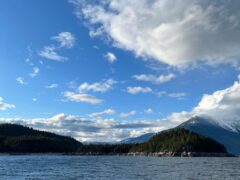
Our tmxʷulaxʷ in the Arrow Lakes