Our Traditional Way of Life
The original people of the Okanagan are known as the Syilx speaking people. We have been here since the beginning of people on this land.
The Syilx people of the Okanagan Nation are a trans-boundary tribe separated at the 49th parallel by the border between Canada and the United States.
Historically, we lived in semi-nomadic communities, relying on hunting, fishing, gathering, and trade. Today, we continue to maintain our cultural practices and have a strong connection to the traditional lands despite the impacts of colonialism.
Pre-Colonization
Before European invasion, the Syilx moved freely between the south, north, west, and eastern parts of their territory. The Syilx people had a very well organized system. They were organized by how the land was used for survival on the Syilx cultural traditions. The land was used for hunting, fishing, root digging and berry picking. The traditional food gathering areas were shared by all the Syilx. Some territories were also shared with other friendly tribes.1
In 1876, before colonization and the imposition of the federal Indian Act, the Syilx Okanagan people were a self-sufficient, self-governing people. The communities thrived on hunting, fishing, gathering, and trading. The Okanagan economy was productive and organized with regulated resource management practices in place.
The Syilx people had one High Chief who lived in the Northern Okanagan district at Nkmepelks and who traveled to visit each district. Each district had a head tribal chief and chiefs for each village. All districts cooperated with each other and shared hunting, fishing and food gathering territory, they also inter-married.1
A high chief represented the laws of the whole Syilx at the nation level to protect the rights of the Syilx. The high chief chose and gave his title to one that he trained before his death. The high chief family decided among themselves who could continue the responsibility of carrying the right of all the Syilx forward. They are responsible for protecting the land, the people, the language and the Syilx ways.1
Large districts had a tribal chief. Some large districts had two tribal chiefs. Usually there was the main tribal chief to keep peace between villages and another called a warchief. The warchief was one who watched for enemies from outside their territory. His role was to protect the Syilx people.1
One of the most outstanding laws of the Syilx is to learn to live and work in harmony with everyone and share with everyone in the community. We were taught in the cepcaptikʷ story of turtle that we must not think only of ourselves as individuals. We were taught that having more than others has to do with power and control of others. We were taught that it is wrong to have more things while others go without in your community or family. Wealth is to be enjoyed by all in times of plenty, and hardship is to be faced by all in bad times. The people stay strong together that way and it is good governance.1
The Syilx Okanagan People have occupied the Okanagan traditional territory since time immemorial. The Okanagan land base was approximately 43,000 square miles, situated in what is now known as south central British Columbia and north central Washington state. Syilx Okanagan society was marked by community cohesion and strong kinship ties, by cooperation, respect for community members and for the land.
The society was a matrilineal society with sub-chiefs who monitored the territory’s resources. A Tribal Chief oversaw the protection of the people, trade with other nations, and the safety of the people. Baker (1990) states, “Vast trading networks are evident in the archaeological record on the Plateau,”. The dynamics of Syilx Okanagan traditional society were irrevocably changed by “the land-based fur trade, the gold rush in the interior of British Columbia and the arrival of Christian missionaries”.2
1 Maracle, L.; Armstrong, J.; Derrickson, D.; Young-Ing, G. (eds). (1994). We get our living like milk from the land. Penticton: Theytus Books
2 Baker, James. (1990). “Archaeological Research Concerning the Origins of the Okanagan People.” In Webber, J. (ed.), Okanagan Sources. Penticton: Theytus Books, pp. 10- 50.
See Also
Suggested Resources

captikʷł
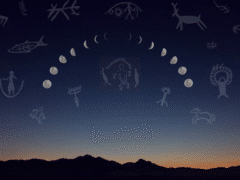
13 Moon Calendar
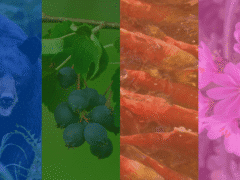
How Food Was Given: Four Food Chiefs