Skip to content

Learning Resources

Fish in Schools (Fins)

See more

Introduction Lesson: Broodstock

“Broodstock” refers to mature fish that are specifically selected for breeding in a hatchery environment. These fish are used to...

Introduction Lesson: kł cp̓əlk̓ stim̓ Hatchery

The kł cp̓əlk̓ stim̓ Hatchery is a testament to the perseverance of the Syilx people to realize their dream of restoring the ntytyix (Salmon) – one of our Four Food Chiefs – to their original habitat and rightful place in our territory.

Grade 1 Lesson: When We Take Care of Them, They Take Care of Us

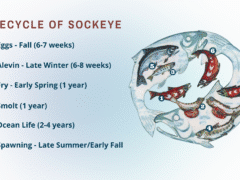
To achieve well-being from the Syilx perspective, one must recognize their responsibility to all creation and be willing to give back, including honoring the contributions of sc̓win (sockeye) fish, which exemplify reciprocity in their journey home.Please review full curriculum in the PDF at the bottom of the page to gain full understanding of the lesson and activity.

Key Fish Terms

“One of the key values in our Indigenous Syilx approach to learning is that we must create relationships for learning...

wápupxn Lynx

See more

Grade 2 Lesson: Interpreting and Graphing a Lynx Diet

Discover how to visually and symbolically represent data through tallying and graphing. Make connections between mathematical concepts, Syilx perspectives, and the environment and develop a better understanding of comparative language in the context of predator and prey relationships.Please review full curriculum in the PDF at the bottom of the page to gain full understanding of the lesson and activity.

Grade 3 Lesson: Predator and Prey Interactive Role Play

Living organisms exhibit great diversity, can be categorized, and interact within their ecosystems. Observe both living and non-living entities in your local environment, and recognize First Peoples' perspectives and knowledge as valuable sources of information.Please review full curriculum in the PDF at the bottom of the page to gain full understanding of the lesson and activity.

Grade 2-3 Full wápupxn Lynx Curriculum

BC Curriculum connections to Syilx Okanagan peoples’ ways of knowing, doing, and being. Syilx people have always cared for and managed wildlife and ecosystems as part of our inherent responsibility to sustain life on our territory.

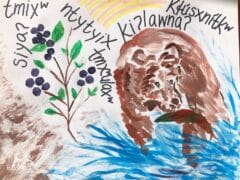
kiɁlawnaɁ Grizzly

See more

Grade 1 Lesson: Storywork with Syilx captikʷł: tˊiɁtˊiɁmúł ttwit (Lazy Boy)

This story adapts the captikʷł of Lazy Boy, focusing on a boy's journey of self-care, wellness, and community service. The Syilx people have shared their history through captikʷł (oral histories) for thousands of years.Please review full curriculum in the PDF at the bottom of the page to gain full understanding of the lesson and activity.

Grade 3 Lesson: First Nation Territory Maps and Ecosystem Mind Maps

Learning about Indigenous peoples fosters multicultural awareness and respect for mapping and its colonial history. Organize ecosystem data through drawings and use mind maps to illustrate biodiversity and relationships.Please review full curriculum in the PDF at the bottom of the page to gain full understanding of the lesson and activity.

Grade 4 Lesson: Analyzing Grizzly Bear Population Units

The decline in Grizzly populations causes an imbalance within our natural ecosystems. From the Syilx perspective, the well-being and existence of Grizzly Bears are deeply connected to the wellbeing of the land and all living things.Please review full curriculum in the PDF at the bottom of the page to gain full understanding of the lesson and activity.

Grade 2-4 Full kiɁlawnaɁ Grizzly Curriculum

BC Curriculum connections to Syilx Okanagan peoples’ ways of knowing, doing, and being. Syilx people have always cared for and managed wildlife and ecosystems as part of our inherent responsibility to sustain life on our territory.

siwɬkʷ Water

See more

Introducing the siwɬkʷ Water Curriculum

siwɬkʷ Water Curriculum K-12 Teacher’s Resource Guide incorporates Syilx traditional water knowledge into the curriculum objectives based on the core competencies listed in B.C.’s new curriculum.

Introduction Lesson: siwɬkʷ Water Declaration

The Syilx Water Declaration serves as a living document on the Syilx relations and values to water. This document communicates the importance of water and responsibilities we have as Syilx people

Introduction Lesson: Syilx History

The Syilx People of the Okanagan Nation are a trans-boundary tribe separated at the 49th parallel by the border between Canada and the United States. Our Nation is comprised of seven member communities in the Southern Interior of British Columbia. Our members share the same land, nsyilxcən language, culture, and customs. We are a distinct and sovereign Nation.

Introduction Lesson: Syilx Worldview

The Syilx Nation's worldview emphasizes interconnectedness, viewing nature relationally without distinction between animate and inanimate beings, including land, animals, and people.Please review full curriculum in the PDF at the bottom of the page to gain full understanding of the lesson and activity.

K-4 Full Water Curriculum

This activity allows students to observe the many different forms water presents itself in our lives.Please review full curriculum in the PDF at the bottom of the page to gain full understanding of the lesson and activity.

Grade 5-7 Full Water Curriculum

This activity emphasizes the Syilx people’s sacred relationship with water. Students will gain a respect for Syilx ways of knowing, specifically regarding what has been culturally appropriated.Please review full curriculum in the PDF at the bottom of the page to gain full understanding of the lesson and activity.

Grade 8-12 Full Water Curriculum

There are several issues that can impact the health of the Okanagan watershed; such as floods, forestry, climate change, government and treaties, as well as invasive species.Please review full curriculum in the PDF at the bottom of the page to gain full understanding of the lesson and activity.

Grade 9-12 Full Water Curriculum

Spending time outdoors allows us to develop an understanding of the natural environment and ourselves. When we advocate for the well-being of others, it connects us to the land and our community.Please review full curriculum in the PDF at the bottom of the page to gain full understanding of the lesson and activity.

Full siwɬkʷ Water Curriculum

This resource guide provides Syilx and non-Syilx educators, School Districts and Band Schools with teaching materials and on-the-land activities featuring Syilx cultural perspectives and nsyilxcen language on the topic of water.